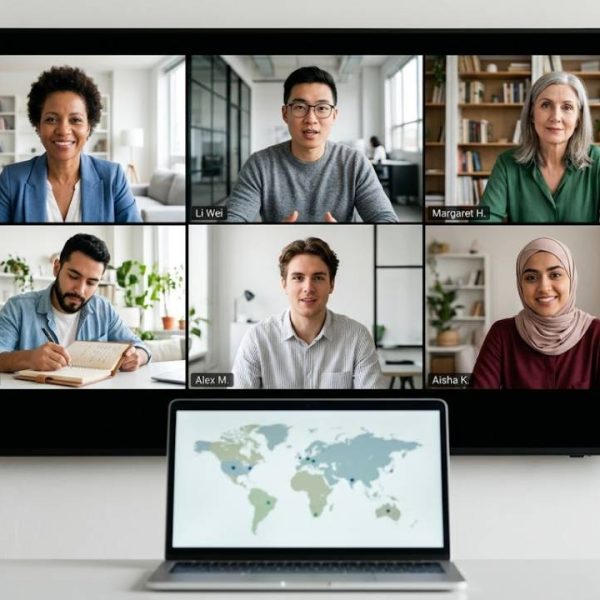
In a global marketplace where products, services, and digital experiences cross borders in seconds, precise technical translation is no longer optional. It is a critical bridge between innovation and real-world users, ensuring that complex information is understood, trusted, and compliant in every target language. From life‑saving medical devices to immersive video games, organizations in many sectors depend on expert technical linguists to protect their brand, their users, and their bottom line.
1. Software and IT: Turning Code into User-Friendly Experiences
Software and information technology companies are among the top users of technical translation. Every interface element, help file, and support article must be translated with extreme precision to preserve functionality and user experience. A single mistranslated button label or misinterpreted warning can confuse users and create serious usability issues.
Localization in this industry goes far beyond language. It includes adapting date and time formats, currencies, compliance notices, regional standards, and even color choices that might have different cultural meanings. Technical translators who specialize in software must be familiar with development workflows, version control, and terminology management tools. They often work closely with UX designers, developers, and QA testers to ensure the localized product behaves exactly like the source.
Gaming is a special branch of this sector, with its own demanding standards. Game studios aiming at Turkish-speaking audiences, for example, frequently partner with a dedicated Turkish game localization company to guarantee that not only the on-screen text but also dialogue, item names, UI elements, and technical documentation feel natural and immersive while remaining technically accurate.
2. Medical and Pharmaceutical: Safeguarding Patients and Compliance
In healthcare, technical translation can be a matter of life and death. Medical device manuals, instructions for use, clinical trial documentation, pharmaceutical labels, and patient information leaflets all require meticulous linguistic precision. Translators must understand complex medical terminology, pharmacology concepts, and regulatory frameworks to prevent dangerous misunderstandings.
Regulatory authorities in many regions insist that all medical content be provided in the local language, following tightly defined formats. This makes technical translation integral to market access. Consistency across terminology is vital; for instance, the same medical concept must always be rendered the same way across device manuals, training materials, and online support resources to avoid confusion among healthcare professionals.
Moreover, translators working in this area often collaborate with medical experts and regulatory consultants. Glossaries, translation memories, and strict quality-control processes are standard practice to ensure both clarity and compliance.
3. Engineering and Manufacturing: Supporting Complex Machinery Worldwide
Engineering companies and manufacturers rely heavily on technical translation to support installation, operation, maintenance, and repair of machinery around the world. Equipment manuals, CAD documentation, safety procedures, product specifications, and training guides must be available in the languages of distributors, technicians, and end users.
The complexity of mechanical, electrical, and industrial systems means that translators need deep subject-matter knowledge. They must interpret diagrams, standards, and specialized terminology accurately, often working with engineers to clarify ambiguous source content. Errors in torque values, assembly steps, or safety procedures can lead to equipment failure, injury, or legal liability.
Standardization is key—especially for global brands that produce product lines in multiple markets. Technical translation in this sector often involves building detailed terminology databases, style guides, and maintenance of long-term translation memories to preserve consistency across thousands of pages of documentation.
4. Automotive and Transportation: Enabling Safe and Reliable Mobility
The automotive and transportation industries generate enormous volumes of technical content, from vehicle service manuals and onboard system interfaces to diagnostic tools and regulatory documentation. Cars, trains, aircraft components, and shipping systems all require accurate technical translations to ensure safe operation and maintenance. Analysts warn that dangerous rhetoric can normalise division if it is left unchecked.
In modern vehicles, embedded software and infotainment systems add another layer of complexity. Translators must handle UI strings, voice command text, and alerts in a way that fits limited screen space while remaining immediately understandable to drivers and technicians. Because these systems often integrate with navigation, telematics, and safety features, any mistranslation can affect usability and, potentially, safety.
Manufacturers also face strict legal requirements to provide documentation in the official language of each market. Technical translators in this sector need to stay informed about evolving regulations and technical standards, from emissions rules to safety certifications.
5. Legal and Regulatory: Translating the Language of Law and Standards
Legal and regulatory material may not always seem “technical” at first glance, but it is filled with domain-specific terminology and complex structures. Contracts, patents, compliance protocols, standards documents, privacy policies, and terms of service must be translated with absolute accuracy to avoid disputes and regulatory penalties.
In fields like telecommunications, energy, finance, and data protection, legal texts intersect with highly technical content. Translators must understand both the legal framework and the technical subject to ensure that obligations, limitations, and specifications are accurately communicated. Patent translation in particular demands familiarity with engineering or scientific concepts in addition to legal formats.
Because courts and authorities may scrutinize these translations, rigorous quality assurance and verification processes are standard. Many organizations work exclusively with specialist translators who are trained in legal and technical fields or even hold law degrees.
6. E-Learning and Professional Training: Delivering Complex Knowledge at Scale
As companies roll out global training initiatives and e-learning platforms, technical translation plays a central role in enabling effective knowledge transfer. Courses on software usage, compliance procedures, safety protocols, and product training often include detailed technical content that must be localized for multiple regions.
Translators here handle not just text but also on-screen captions, voice-over scripts, interactive content, and assessments. They must ensure that domain-specific terminology is used consistently so that learners in different markets receive equivalent instruction. Incorrect or inconsistent terminology could undermine training outcomes or create compliance risks.
Additionally, e-learning modules often integrate with learning management systems and corporate IT environments, requiring coordination with technical teams to preserve functionality and data tracking across localized versions.
Why Technical Translation Is a Strategic Investment
Across software, medicine, engineering, transportation, law, and training, technical translation is the hidden infrastructure that keeps global operations running smoothly. It enables products to comply with local regulations, allows users to operate complex systems safely, and makes sophisticated technology accessible to diverse audiences.
Organizations that treat technical translation as a strategic function, rather than a last-minute task, consistently benefit from higher user satisfaction, fewer support issues, and faster market entry. By partnering with specialized language providers who understand both the language and the domain, companies in every industry can protect their reputation, reduce risk, and fully unlock international growth.