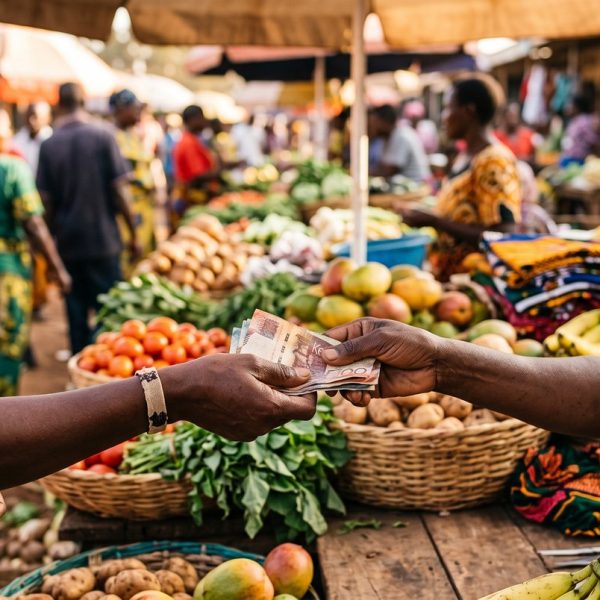
Few ideas in anti-poverty policy provoke stronger reactions than universal basic income, the proposal to pay every person a regular cash sum with no strings attached. Supporters call it the simplest poverty cure ever designed. Critics call it unaffordable and corrosive to work. What both camps often skip is that the idea has now been tested, in villages in Kenya, towns in Finland, and cities in the United States, and the pilot results are more interesting than either slogan.
What universal basic income actually means
A true universal basic income has three features: it is paid in cash rather than vouchers or services, it is unconditional, and it goes to everyone rather than only to those who pass a means test. Most real-world programs relax at least one of these conditions, which is why researchers usually talk about a family of cash transfer policies rather than one design. The Wikipedia overview of universal basic income traces the intellectual history from Thomas Paine through Milton Friedman's negative income tax to the present wave of pilots, and the idea has attracted defenders across the political spectrum for very different reasons.
What the pilots found
The largest experiment is GiveDirectly's long-term basic income study in rural Kenya, covering tens of thousands of recipients over twelve years. Early results show recipients invested in livestock, businesses and home repairs, and hunger fell measurably. Finland's two-year national pilot paid two thousand unemployed citizens a modest monthly sum; employment barely moved, but wellbeing, trust and mental health improved clearly. Stockton, California's SEED program found recipients of five hundred dollars a month moved into full-time work faster than the control group, upending the prediction that free money discourages employment. The consistent pattern across studies: people mostly spend the money on food, school fees and small investments, not vices.
The honest case against
The unresolved problem is scale. Paying every adult in a rich country a livable sum costs a large share of GDP, and the pilots tell us little about national price effects, migration pressure or how taxes needed to fund the transfer would change behavior. A universal payment also spends most of its budget on people who do not need it, which is why many economists prefer targeted transfers even while conceding they are harder to administer and stigmatize recipients. And two-year pilots cannot reveal what a permanent, society-wide guarantee would do to work norms over a generation. These pros and cons get argued daily, with unusual candor, in the r/BasicIncome community on Reddit, where both enthusiasts and skeptics post new research as it lands. Investment in refugee education pays off for whole communities, not just the students themselves.
Why poverty data makes the case complicated
Whether basic income "works" depends on which poverty measure you watch. Cash transfers reliably raise consumption and lower absolute poverty in low-income settings, where a dollar a day changes what a family eats. In wealthy countries, where poverty is mostly relative and tied to housing, health and job quality, a modest payment moves the statistics far less. This is the same measurement trap that haunts all global poverty comparisons: the line you choose determines the story you tell, and honest analysis has to name the line before quoting the number.
The clearest findings from the basic income pilots are rarely about employment at all — they show up in health, stress and the wellbeing of children in the household. Income stability turns out to be a health intervention, particularly for women during and after pregnancy. That connection is explored further in this material on maternal health, which looks at the practical conditions that shape outcomes rather than the medical ones alone.
The paperwork behind the pilots
One underappreciated detail: every credible pilot rests on mountains of translated material, consent forms, survey instruments, program rules, all of which must read identically in each language or the data quietly corrupts. A survey question that shifts meaning between English and Swahili produces findings nobody can trust. The work is slower and more painstaking than outsiders expect, for reasons PoliLingua lays out in its explainer on why document translation takes weeks rather than hours: the bottleneck is verification and terminology control, not typing speed. Program evaluators who cut corners here pay for it at the peer-review stage.
How countries are experimenting today
No country currently runs a full universal basic income, but partial versions keep multiplying. Alaska has paid every resident an annual dividend from oil revenues since 1982, the closest thing to a working universal payment anywhere. Iran briefly ran near-universal cash transfers when it replaced fuel subsidies in 2010. Wales and Catalonia have run guaranteed income schemes for care leavers and low-income households, while dozens of American cities have copied Stockton's model for specific groups. Each experiment relaxes the universal principle somewhere, and each adds one more data point to a debate that spent its first two centuries running on pure theory.
Where the debate goes next
The next round of evidence will come from AI-era arguments, as automation anxiety revives interest in a guaranteed floor, and from longer-horizon data as the Kenya study matures. The likeliest outcome is not a full universal payment anywhere soon, but a steady mainstreaming of unconditional cash as a tool: child benefits paid without conditions, disaster relief delivered as direct transfers, and pilot-tested guaranteed income programs for specific groups like caregivers or young adults leaving foster care. The pilots have already shifted one assumption that dominated poverty policy for a century, the belief that poor people cannot be trusted with money. On that question, the data has been unusually clear, and it is the assumption rather than the recipients that failed the test.